
Why colour grading matters for buyers
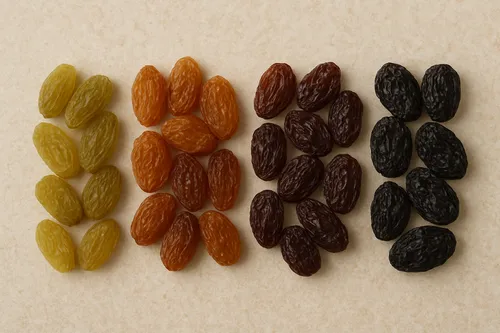
For many retail and industrial applications, colour is the first indicator of raisin quality. Lighter and more uniform raisins signal freshness, good drying practices and proper sorting. Darker or unevenly coloured raisins may still be perfectly usable, but they typically fall into different price brackets and customer expectations.
- Retail brands prefer lighter, uniform grades for strong shelf visibility.
- Industrial users choose colour based on how raisins will appear inside the finished product.
- Price-sensitive applications may accept darker grades if functional performance is unaffected.
How suppliers define colour grades
While each supplier uses slightly different naming, most Turkish exporters follow a common pattern when describing Sultana raisin grades. The main colour categories include:
Standard No. 9 (lightest)
A premium grade with bright golden or light amber tones. Mostly used in retail packs, premium muesli, cereal mixes and products where visibility is important.
Medium No. 8
The industry’s most widely used grade. Suitable for both retail and industry, offering a balanced price-to-quality ratio.
Dark No. 7
Typically chosen for applications where appearance is less critical, such as baking, extruded cereal, sauces or price-sensitive blends.
These numbers do not indicate quality alone — rather, they describe colour intensity and typical usage scenarios.
What affects raisin colour?
Several factors influence the final colour of raisins, including:
- Drying method — sun drying vs. shade drying.
- Sultana pre-treatment — potassium carbonate and oil solutions used to accelerate drying.
- Berry maturity at harvest.
- Weather conditions during the drying season.
- Sorting technology — colour sorters remove darker berries for higher-grade lots.
Buyers working with premium products often request additional colour sorting to improve visual uniformity.
How colour affects pricing and negotiation
Colour is a direct price driver in the raisin market. Lighter grades require better raw materials and more intensive sorting, which increases production costs. Because of this:
- Light grades typically command a higher price premium.
- Mid-grade Sultanas usually offer the best value for high-volume buyers.
- Darker grades allow cost reductions for industrial blends without affecting functionality.
When comparing supplier offers, buyers should always check that colour grades match exactly — not all exporters use the same naming conventions.
Which colour grade to choose for your project?
Retail packs
Lighter, more uniform grades provide better aesthetics and consumer confidence. No. 8 or No. 9 is typical.
Cereal, muesli and granola
Mid-range colour grades work well unless the recipe calls for a visually premium profile.
Bakery and industrial processing
Darker grades are often sufficient because colour becomes less visible after baking or mixing.
Summary for buyers
Colour grading helps buyers compare offers fairly and match raisin lots to their application needs. Whether sourcing for retail or industrial channels, defining expectations upfront ensures consistency and avoids misunderstandings when reviewing samples or setting annual contracts.
Our team at Atlas Dried Fruits & Nuts supports buyers with transparent grading standards, sample photos and tailored specifications for all raisin categories.