
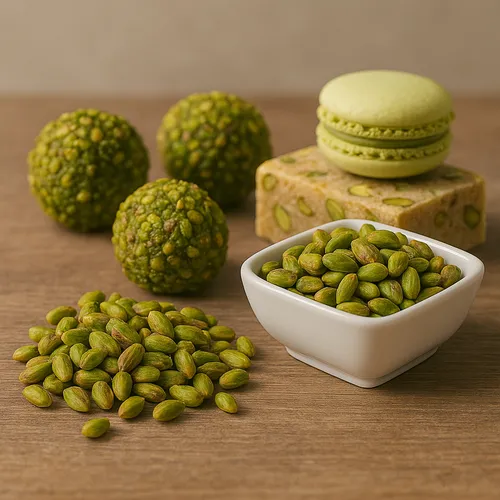
Why green pistachio kernels dominate the confectionery sector
Unlike in-shell pistachios used for snacking, the confectionery industry primarily cares about kernel color, uniformity and cutting performance. The greener the kernel, the stronger its premium visual impact, which directly influences the appeal of chocolates, gelato, pralines and coated products.
Turkish Antep pistachios are globally recognized for their high natural green intensity, making them the preferred choice for artisan and industrial-scale producers across Europe, the Middle East and Asia.
How pistachio kernels are color-graded
Turkish processors typically classify kernels into several categories based on internal green color and surface appearance. While naming conventions vary by supplier, the general distinctions are:
- Extra Green Kernels (EGK): Deep, uniform green color; the highest grade for ultra-premium products.
- Bright Green Kernels (BGK): Strong green color with excellent uniformity; widely used in chocolates and gelato.
- Green Kernels (GK): Standard green color; ideal for bakery, toppings and mid-premium confectionery.
- Green Split Kernels: Same color grades but mechanically split; used where cutting or milling is required.
Even small variations in green intensity can significantly change the look of a finished product, which is why color screening is one of the most important steps in kernel grading.
Which pistachio formats do confectionery producers use?
1. Whole kernels
Best for applications where visual impact is key — premium chocolate bars, praline centers, and decorative toppings. Whole kernels must have a clean surface, minimal blemishes and very low shell fragments.
2. Halves and split kernels
Often used for inclusions, diced blends and applications where the kernel will be cut or ground. These formats offer excellent value because they maintain strong color while reducing overall cost per kilogram.
3. Small pieces and pistachio chips
Popular in ice cream and bakery products where fine distribution is needed. Processors prefer these grades for fast mixing, consistent coating and uniform distribution in fillings.
Pistachio color and flavor performance in chocolate
Chocolate manufacturers judge pistachio quality by how well the green color and aroma stand out inside the finished product. Premium bars, pralines and dragée-style coated nuts rely on:
- High chlorophyll content: ensures vibrant green visibility.
- Uniform particle size: reduces color streaking during cutting.
- Fresh crop aroma: crucial for enhancing chocolate’s sweetness and creaminess.
Turkish pistachios perform exceptionally well because their natural green tone remains stable even after exposure to cocoa fats and tempering cycles.
Applications across the confectionery industry
Pistachio kernels are used in a wide variety of high-value products:
- Premium chocolate bars — large kernels or halves placed strategically for visual impact.
- Pralines and truffles — finely milled green kernels incorporated into fillings.
- Dragée coatings — whole kernels coated in chocolate or sugar.
- Gelato and ice cream — chips or pieces mixed uniformly for green speckling.
- Baklava and pastry fillings — requiring vivid color to signal premium quality.
The growing global demand for pistachio-flavored desserts continues to increase kernel consumption every year, especially in Europe, Japan, Korea and the Gulf region.
What bulk buyers should specify
To ensure consistent performance, buyers often define:
- Color grade (EGK, BGK, GK, etc.).
- Size and uniformity (whole / halves / chips).
- Shell fragment limits (typically extremely low for confectionery use).
- Moisture content (usually 3–5% for stability).
- Sorting method (laser sorting, manual inspection or both).
Many confectionery factories request pre-sorted, double-cleaned kernels to reduce inspection time and avoid issues during cutting or inclusion.
Summary
Pistachio kernels — especially premium green grades — are essential for confectionery brands looking to elevate their product appearance and flavor. Understanding how green grades are defined, which formats perform best, and how to specify kernel uniformity helps buyers secure reliable supply for high-end applications.
If you need guidance choosing the right color grade or kernel format for your chocolate or gelato project, our team can prepare a tailored offer with detailed specifications and current price indications.