
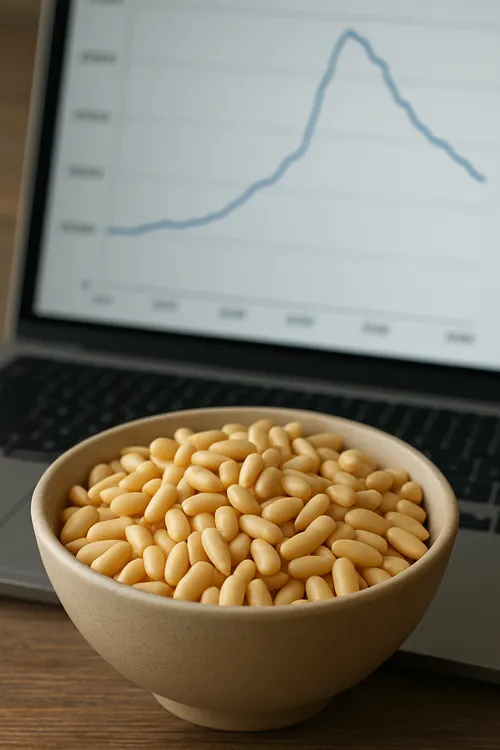
Why pine nuts rank among the highest-value nuts
Pine nuts require significantly more labour, time and resource investment compared to most nuts. Each cone must be collected, dried, opened and manually separated — a process that limits global supply and creates natural price stability at a higher level.
Key factors behind their premium value include:
- Slow-growing trees that take many years to mature.
- Manual-intensive harvesting and shelling steps.
- Limited geographic origins with commercial-scale production.
- High demand from gourmet, Mediterranean and Asian cuisines.
Main global origins and their price influence
The global market is dominated by a few origins, each with different characteristics and price points. The most relevant for industrial buyers include:
1. Turkish pine nuts (Pinus pinea)
Known for large kernels, strong flavour and premium quality. Prices are usually at the upper end of the global range due to demand from gourmet and Mediterranean markets.
2. Chinese/Korean pine nuts (Pinus koraiensis)
Smaller and less uniform but widely available. These origins drive much of the global price movement, especially during large harvest years.
3. Pakistani/Afghan pine nuts (Chilgoza)
Long, slender kernels with unique flavour. Niche but increasingly popular in premium mixes.
4. Russian/Siberian pine nuts
Used more in regional markets but occasionally influence international prices depending on crop size.
Key price drivers buyers monitor
Unlike many agricultural markets, pine nut prices can shift rapidly. Importers typically watch:
- Crop size — even small changes significantly affect supply.
- Labour costs — especially in origins with heavy manual work.
- Export regulations — particularly in Asian origins.
- Currency effects — impacting competitiveness of major exporters.
- Foodservice demand cycles — strong influence on premium nuts.
How buyers approach price negotiations
Because pine nuts fluctuate more than many nuts, importers often prefer structured discussions rather than short-term spot buying. Common negotiation themes include:
- Setting grade-specific expectations for kernel size and defect levels.
- Volume-based price tiers for long-term programs.
- Mixed-container flexibility when working with high-value items.
- Shipment timing to align with crop freshness and promotional calendars.
Understanding price differences between grades
Small variations in size, colour and broken percentage can lead to meaningful price differences. For example:
- Extra-large whole kernels command the highest price.
- Standard whole kernels are the most commercially used grade.
- Halves and pieces offer a cost-efficient option for bakery and blended mixes.
Planning seasonal contracts and supply
Many brands plan their pine nut purchases around:
- Peak harvest availability for best pricing opportunities.
- Quarterly call-offs to manage cash flow and warehouse space.
- Year-long programs to ensure consistent quality and origin.
Turkish pine nuts are often included in higher-value, long-term contracts due to their flavour profile and consistent market demand.
Summary
Pine nuts operate in a unique, high-value market where quality grades, origin differences and crop volatility all influence pricing. Buyers who follow seasonality, understand negotiation points and define clear specifications are better equipped to secure stable supply at competitive levels.
For up-to-date pine nut pricing, availability or supply planning, the Atlas team is ready to assist with customized quotations.