
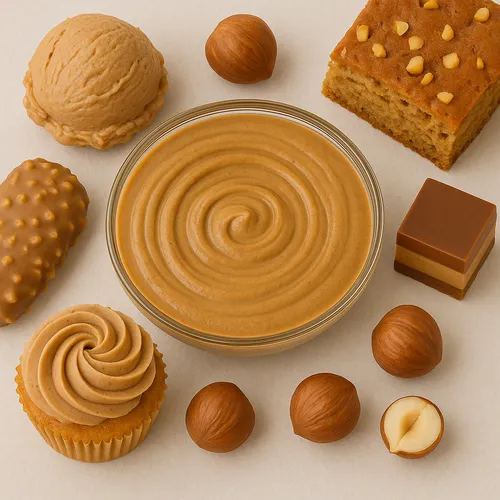
Why hazelnut paste is essential in confectionery and gelato
Hazelnut paste offers a naturally rich, nutty profile that blends seamlessly into chocolate, nougat, praline fillings, spreads and ice cream bases. Its versatility allows manufacturers to create smooth textures, build flavor layers and achieve premium positioning in both retail and food service applications.
- High fat content creates a silky mouthfeel ideal for ganache and spreads.
- Concentrated flavor ensures stability even after baking or freezing.
- Clean label: typically 100% hazelnuts with no added sugar or emulsifiers.
- Color consistency supports branding and product uniformity.
Key specifications manufacturers evaluate
Industrial buyers usually request detailed technical specs for hazelnut pastes. The most influential parameters include:
1. Roast level (light · medium · dark)
Roasting dramatically influences flavor. Light roast preserves delicate, milky notes preferred for gelato and fine pastries. Medium roast is the most versatile for praline, spreads and fillings. Dark roast produces a deeper, more caramelized profile favored in chocolate bars.
2. Fat content (typically 55–65%)
The natural fat content of Turkish hazelnuts is already high, contributing to excellent texture. Higher fat pastes create a smoother finish, while lower fat pastes are sometimes preferred in systems where firmness or aeration is important.
3. Particle size / fineness
For premium confectionery, ultra-fine pastes are essential. Most manufacturers require less than 30 microns to avoid graininess in chocolate and gelato.
4. Color intensity
Consistent color is crucial for spreads, fillings and gelato bases. Buyers typically specify a target tone between light beige and medium brown, depending on roast.
Choosing hazelnut pastes for gelato applications
Gelato producers rely heavily on paste quality since the ingredient is responsible for the base flavor. Turkish processors supply:
- 100% pure hazelnut paste (single-ingredient, no sugar)
- Premium roasted pastes with customized color and intensity
- Reduced-fat options for lighter recipes
Gelato makers often specify:
- Target roast profile
- Desired viscosity
- Color range for visual consistency
- Particle fineness suitable for freezing
Hazelnut pastes in pralines, nougat and chocolate fillings
In confectionery, hazelnut pastes are often blended with sugar, cocoa, milk powders or fats to create praline masses and spreads. Manufacturers choose pastes based on:
- Aroma strength — lightly roasted pastes produce a creamier profile, while dark roasts add depth.
- Compatibility with cocoa butter — essential for smooth, melt-in-mouth texture.
- Stable viscosity — ensures consistent piping, filling and moulding.
Customizing pastes for industrial buyers
Turkish hazelnut processors frequently produce customized pastes based on buyer requirements. Customization options include:
- Tailored roast levels
- Specific micron fineness
- Fat-level adjustments
- Blends with cocoa or milk powders
- Organic-certified versions
These options help confectionery and gelato producers maintain brand identity and match regional preferences.
Packaging formats for export
Bulk hazelnut paste is typically exported in:
- 12.5 kg food-grade pails
- 20–25 kg tins
- 1000 kg IBC totes for industrial plants
Modified atmosphere packaging and nitrogen flushing can be added for premium or long-distance shipments.
Summary
Hazelnut paste is a cornerstone ingredient for premium confectionery and gelato production. By defining roast level, fat content, particle size and color expectations, manufacturers can secure highly consistent performance and achieve distinctive flavor profiles.
Our team supports buyers with detailed specifications, pricing, and customized paste options tailored to industrial needs.