
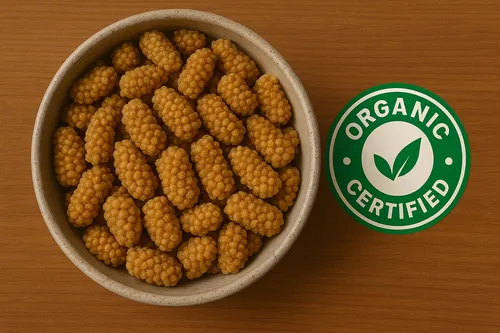
Why organic mulberries are gaining traction
Consumer demand for clean-label products has shifted many cereal, snack and health-food producers toward organic ingredients. Turkish mulberries fit naturally into this trend because they are sun-dried, free of added sugars, and grown in regions where small-scale farms dominate.
Buyers appreciate organic mulberries for:
- Clean, natural sweetness without additives
- Attractive marketing value for premium retail lines
- Stable supply across different crop years
- Compatibility with other organic dried fruits and nuts in blends
Certification schemes commonly requested
Most international buyers work within one of the following certification frameworks:
- EU Organic — required for sales in the EU and EEA
- USDA-NOP Organic — necessary for the United States
- UK Organic / Soil Association — for UK-focused brands
- Canadian Organic (COR) — for the Canadian market
Organic projects require full traceability from farm to finished product, meaning suppliers must maintain updated field records, ICS (Internal Control System) documentation and inspection reports.
Documentation buyers expect from suppliers
To ensure organic compliance, bulk buyers usually request:
- Valid organic certificates for the current crop year
- Transaction certificates (TCs) for each shipment
- Pesticide residue analyses confirming compliance with organic limits
- Product specifications defining size, colour and moisture
- Traceability records including farmer groups and batch numbers
Buyers also tend to request a list of organic-approved processing aids (if any) used during cleaning or sorting.
Key considerations for developing an organic mulberry program
Long-term organic projects require careful planning. Importers should define:
- Preferred size calibration (whole, small, mixed)
- Colour expectations based on retail positioning
- Moisture targets suitable for cereal or snack applications
- Packing format such as 5 kg, 10 kg or 12.5 kg cartons
- Shipment windows to prevent shortages during high-season demand
Because organic mulberries are often pre-allocated before the season ends, buyers benefit from early contracting or reservation programs.
How Turkey manages organic mulberry production
Organic mulberries in Turkey are grown mainly in high-altitude regions with minimal pollution pressure. Farms are inspected annually, and processing facilities follow strict organic segregation rules:
- Dedicated organic storage areas
- Full cleaning protocols before organic run times
- Clear pallet marking and batch control
- Mandatory independent certification audits
This ensures organic products remain uncontaminated from conventional lots throughout the season.
Summary
Organic mulberries allow retailers and manufacturers to strengthen their clean-label and wellness-oriented product lines. When suppliers provide consistent documentation, clear specifications and reliable seasonal planning, organic projects run smoothly and support long-term brand positioning.
Atlas supports global customers with EU-Organic, USDA-NOP and other certifications, offering flexible packing formats and mixed-container shipments for organic assortments.