
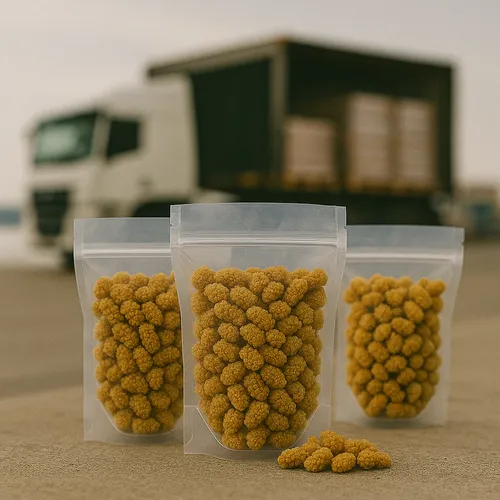
Why packaging matters for dried mulberries
Unlike many dried fruits, mulberries have a naturally airy and brittle structure. This allows them to absorb moisture quickly and break more easily under load. Proper packaging protects the fruit during:
- container transport in varying climates
- warehouse storage over several months
- multiple handling points in industrial production
For this reason, buyers typically choose packaging that minimizes oxygen and moisture exposure while offering physical protection against crushing.
Most common bulk packaging formats
1. 5 kg poly-lined cartons
Preferred by premium retail brands and manufacturers needing intact, whole-calibre mulberries. Smaller cartons reduce compression and maintain shape.
2. 10–12.5 kg cartons for industrial buyers
Suitable for cereal, bakery and bar producers. These formats reduce packaging costs per kg while still offering enough protection for automated dosing systems.
3. Vacuum-packed mulberries
Used less frequently due to the risk of crushing, but helpful in environments with high humidity or long transport routes.
4. Double-poly bags inside cartons
Common for organic-certified shipments and for customers requiring additional moisture control.
Ideal storage conditions for dried mulberries
Mulberries should be stored under conditions that stabilise moisture and prevent discolouration.
- Temperature: 5–12°C for long-term storage; max 18–20°C for short-term
- Humidity: Keep below 55% RH to prevent softening or clumping
- Light exposure: Avoid direct light to protect colour and vitamins
- Airflow: Ensure cartons are not stacked against walls to allow breathing
Mulberries stored in overly humid environments may lose crispness and become sticky, reducing suitability for chocolate, cereal or granola applications.
Stacking & palletisation advice
- Do not exceed 8–10 layers of mulberry cartons per pallet
- Use intermediate slip sheets to distribute weight
- Allow at least 10 cm of clearance from all warehouse walls
- Use stretch wrap gently to avoid crushing the edges
These small adjustments prevent deformation, especially when mulberries are whole and elongated.
Managing stock rotation and shelf life
Most buyers follow a FIFO (First In, First Out) rotation system to keep product fresh.
- Ideal consumption window: 12–18 months from packing
- Organic lots typically have stricter documentation and traceability requirements
- Record batch numbers clearly to maintain continuity across deliveries
Summary
Bulk dried mulberries require careful packaging and storage to preserve colour, texture and commercial value. By choosing the right carton size, controlling temperature and humidity, and using proper palletisation methods, importers can significantly extend shelf life and reduce product loss.
Our team supports buyers with optimised packing formats, mixed-container options and storage recommendations tailored to their market and production needs.