Why apricots work so well in bar manufacturing
Compared to other dried fruits, apricots offer a balanced combination of:
- Natural sweetness without overpowering the recipe.
- Attractive orange tones that stand out in clean-label bars.
- Good chewiness, adding texture to energy and snack bars.
- Strong binding potential when used in puree form.
For brands positioned around health, fibre or natural fruit content, apricots support a very clear product story.
Two main apricot formats used in bars
Manufacturers typically use either:
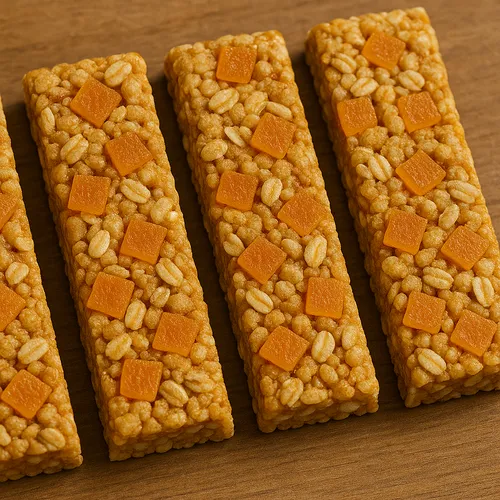
- Diced dried apricots — for visible fruit pieces.
- Apricot puree / paste — as part of the bar’s binder system.
1. Diced dried apricots
Dice sizes for bars usually range from 6–8 mm or 8–10 mm. Larger dice give more visual impact, while smaller dice distribute evenly across the bar.
Manufacturers appreciate diced apricots because they:
- Hold their shape during mixing and pressing.
- Add a flexible chewiness that complements nuts and seeds.
- Do not bleed colour excessively into the mass.
2. Apricot puree (paste)
Puree is commonly used in:
- Fruit bars
- No-bake snack bars
- Energy bars requiring soft bite
High-quality puree provides both flavour and functional binding. Some producers mix apricot puree with date or apple concentrates to modify sweetness or moisture.
Moisture & texture control in bars
Moisture is one of the biggest technical variables in bar manufacturing. Too much moisture softens the bar and reduces shelf-life; too little moisture creates cracks or crumble during cutting.
Typical moisture levels used by manufacturers:
- Diced apricots: 16–20%
- Apricot puree: 18–22%
Suppliers can stabilise moisture to meet a customer’s exact texture requirements.
Dusting options to prevent sticking
Diced apricots used in sticky formulations often require a light dusting to reduce clumping. Common options:
- Rice flour (industry standard)
- Corn starch (for allergen-free lines)
- Tapioca starch (for premium clean-label brands)
How apricots behave during mixing
Manufacturers vary the point at which apricot pieces or puree are added to the mix:
- Diced apricots: usually added late to avoid crushing.
- Puree: added early to help bind dry ingredients.
- Nuts & seeds: added last if high mechanical pressure is used.
Apricot dice maintain shape even in high-pressure forming lines, making them reliable for industrial projects.
Shelf-life and stability considerations
Shelf-life is strongly influenced by:
- Moisture migration between apricot pieces and binder mass.
- Water activity (aw) control.
- Packaging format (flow packs, MAP, vacuum, etc.).
Turkish producers typically supply apricot dice with good stability and consistent aw values for bar applications.
Pricing & sourcing considerations
Prices depend on:
- Raw apricot grade
- Cut size and labour intensity
- Moisture target and dusting requirement
- Market supply conditions at origin
Most bar manufacturers contract several months of supply to secure stable pricing through the season.
Summary
Dried apricots — whether diced or pureed — offer excellent functional and sensory benefits for snack and fruit bar manufacturers. Their colour, chew and clean-label appeal make them suitable for premium and mainstream formulations alike.
Atlas supports producers with tailored dice sizes, customised moisture levels and certified organic or conventional options.