The main factors that define dried apricot grades
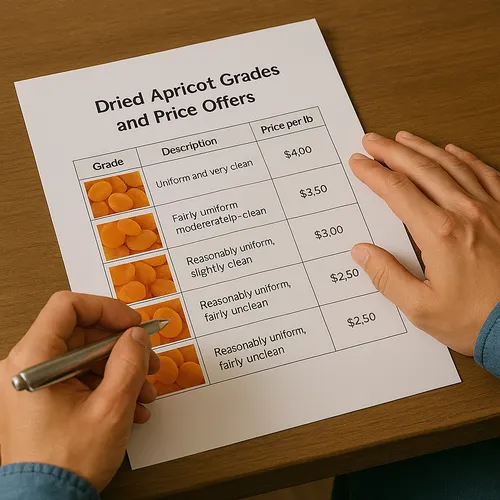
Turkish dried apricots — whether natural or sulfur-treated — are graded based on several commercial criteria. These grades determine both suitability for different applications and the corresponding market price.
- Size (number of apricots per kilogram)
- Colour (especially important for sulfur-treated types)
- Defect tolerance
- Moisture content
- Treatment type (natural vs sulfur-treated)
1. Size grades: the biggest commercial driver
Size is expressed as the count per kilogram. Larger apricots have fewer pieces per kg and therefore command higher prices.
Typical commercial size ranges:
- Size 1: 60–70 pcs/kg (premium retail)
- Size 2: 70–80 pcs/kg
- Size 3: 80–100 pcs/kg
- Size 4–5: 100–140 pcs/kg (mainstream retail)
- Size 6+: 140+ pcs/kg (value segment & industry)
Larger sizes are visually impressive and used by premium brands, while smaller sizes suit baking, confectionery or industrial applications.
2. Colour grades: especially relevant for sulfur-treated apricots
Buyers often classify sulfur-treated apricots by:
- Bright orange (premium retail)
- Standard orange (mainstream retail)
- Dark orange (value segment & mixed-use)
Natural dried apricots, by contrast, vary from dark brown to amber — colour differences are normal and do not carry the same premium/discount structure.
3. Defect tolerance and cleanability
Defects may include blemishes, mechanical damage, hail marks, insect marks or foreign material presence (rare but still a specification point).
Buyers typically request:
- Premium grade — very low defect tolerance
- Choice grade — moderate tolerance for value retail
- Industrial grade — higher tolerance for processing applications
Strong selection and cleaning processes at origin significantly improve consistency and reduce rework costs.
4. Treatment type: natural vs sulfur-treated
Treatment type affects both price and positioning:
- Sulfur-treated: bright colour, longer shelf-life, preferred for retail.
- Natural: darker colour, clean-label appeal, usually priced slightly higher than mid-grade sulfur types.
Organic natural apricots occupy a distinct premium segment with different pricing dynamics.
How price levels are formed
Price is based on a combination of crop conditions, global demand, and the grade-specific factors above. The biggest contributors to price variation are:
- Raw material availability per grade in the season.
- Labour intensity for sorting, selecting and pitting.
- Moisture level (higher moisture sometimes increases weight-based cost).
- Certification requirements (organic, BRC, etc.).
Large buyers mitigate price fluctuations by contracting volume early and smoothing shipments throughout the season.
How to compare supplier offers fairly
When evaluating offers, importers should ensure all suppliers quote using the same structure. A fair comparison should include:
- Exact size grade
- Colour grade (if sulfur-treated)
- Moisture range
- Packing style (bulk cartons, vacuum packs, MAP)
- Defect limits
- Origin certification (organic/non-organic)
- Incoterm (FOB / CFR / CIF)
Without these details, price comparisons can be misleading — especially across different packers.
Summary
Understanding how dried apricot grades work helps importers secure better, more reliable supply agreements. By focusing on size, colour, defects and moisture, buyers can match product specifications to their exact retail or industrial needs and negotiate pricing more confidently.
Atlas provides full-grade assortments, custom selections and stable season-long contracts for retail, private-label and industrial customers.