What makes natural and sulfur-treated apricots different?
Turkish dried apricots are processed in two main ways. The difference is not in the fruit itself, but in how it is dried and preserved:
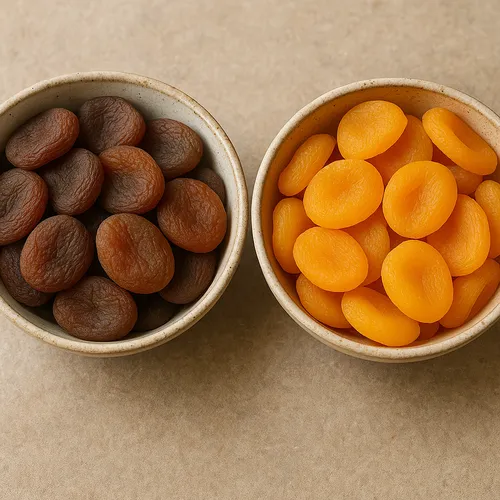
- Natural dried apricots: sun-dried, soft texture, dark brown color, no preservatives.
- Sulfur-treated dried apricots: treated with sulfur dioxide (SO₂) to preserve bright orange color and extend shelf life.
Both types are widely accepted in international markets, but they serve different retail and industrial needs.
Visual appearance and consumer expectations
Color is one of the strongest purchase drivers for dried apricots, especially in retail packaging:
- Natural apricots appeal to health-focused customers who expect minimal processing.
- Sulfur-treated apricots are preferred in mainstream retail due to their bright, attractive appearance.
Many retailers offer both types to serve different customer segments.
Shelf life and stability
Sulfur treatment significantly improves shelf life by slowing oxidation. Typical expectations:
- Natural apricots: 6–9 months, depending on storage.
- Sulfur-treated apricots: 12–18 months, with better color retention.
For tropical markets or warm climates, the extended stability of sulfur-treated fruit is a major advantage.
Flavor and texture considerations
Natural apricots tend to have:
- A deeper, caramel-like flavor
- A softer texture due to higher residual moisture
Sulfur-treated apricots typically offer:
- A brighter, more fruit-forward taste
- Slightly firmer texture, ideal for retail pouches
Which formats perform best in retail?
Retailers often make decisions based on brand positioning:
- Premium natural-food brands: prefer natural apricots.
- Mainstream supermarket brands: overwhelmingly choose sulfur-treated for their color.
- Snack and nut-mix brands: use either type depending on desired color contrast.
Packaging also matters: resealable pouches, transparent windows and bright labeling enhance visual impact.
Price differences and yield factors
Natural apricots typically cost slightly less because they require fewer processing steps. However, yield varies:
- Sulfur-treated apricots maintain color longer, reducing retail spoilage risk.
- Natural apricots may require tighter control of humidity and storage conditions.
Industrial usage preferences
Industrial manufacturers (bakeries, cereal companies, bar producers) consider:
- Color stability during baking: sulfur-treated performs better.
- Label claims: natural apricots support “no preservatives” declarations.
- Piece-size requirements: both formats can be diced or cut as needed.
Summary
The choice between natural and sulfur-treated apricots depends on your brand’s identity, target market, shelf-life needs and price expectations. Both formats have strong commercial roles, and many importers successfully carry a dual assortment.
If you need guidance selecting the right grade, color or moisture range for your project, our team can prepare detailed offers and sample specifications.