Why cereal producers prefer diced dried apricots
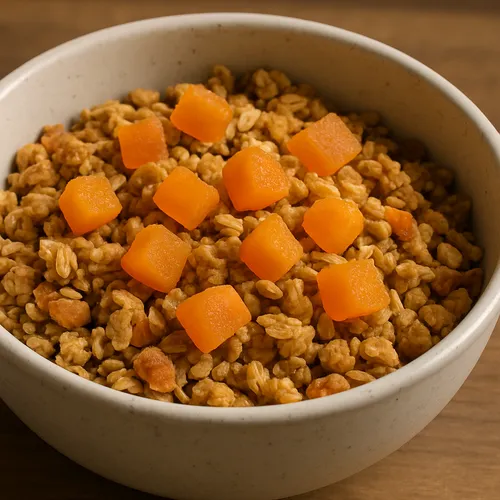
Compared to other dried fruits, apricots provide a unique balance of chewy bite and bright colour that stands out even in darker granola clusters. They deliver:
- Natural sweetness without overpowering flavour.
- Premium visual appeal through orange and amber tones.
- Good mechanical strength during mixing and packaging.
Turkish Malatya apricots are widely preferred due to consistent availability and competitive pricing.
The most popular dice sizes for granola & muesli
Cereal manufacturers typically choose between the following cut sizes:
- 6–8 mm dice: the industry standard, ideal for multi-ingredient granola mixes.
- 8–10 mm dice: used when apricot pieces must be more visually dominant.
- Strips (julienne): preferred by premium muesli brands wanting a handmade look.
Smaller dice blend more easily in high-speed mixers, while larger dice provide stronger fruit identity.
Moisture levels and texture control
Moisture management is one of the most important considerations for granola manufacturers. Too much moisture softens clusters; too little creates hard pieces that may fracture during packaging.
The typical moisture targets for cereal applications are:
- 16–20% moisture for crunchy granola clusters.
- 18–22% moisture for softer muesli blends.
- Stabilised moisture levels achieved through controlled rehydration or drying.
Dusting and anti-clumping considerations
To ensure smooth production flow, diced apricots are often lightly dusted with:
- Rice flour (most common).
- Corn starch or tapioca starch for allergen-free lines.
Dusting prevents pieces from sticking inside the bag or forming clusters inside the augers.
Blending behaviour during production
Depending on the manufacturer’s mixing equipment, diced apricots may need to be added either early or late in the process. General guidelines include:
- Add early for muesli or low-friction blends.
- Add late for granola clusters to avoid crushing.
- Check density compatibility with nuts, seeds and puffed grains.
Price considerations for cereal manufacturers
Several factors influence the bulk price of apricot dice:
- Raw apricot grade (size and colour).
- Cut size and labour intensity.
- SO₂ level (higher brightness often means more sorting).
- Seasonal supply conditions in Malatya.
Buyers usually contract volumes across the full season to stabilise costs.
Summary
Diced dried apricots are one of the most adaptable fruit inclusions for cereal, granola and muesli mixes. Their balance of chewiness, colour and stability makes them a dependable choice for both small and large-scale cereal manufacturers. With the right dice size, moisture level and dusting method, apricots integrate smoothly into any cereal production line.
Our team supports cereal producers with consistent bulk supply, tailored cut sizes and technical guidance.